
The health of the gastrointestinal tract is crucial for your horse’s well-being, performance and immune system. But how does digestion work in horses and how can you specifically strengthen the intestinal flora to avoid intestinal problems?
In this article, you will find out how digestion in horses works, what role feeding and husbandry play in this and what measures you can take to support your horse’s intestinal health in the long term. We also take a look at the most common causes of digestive problems and show you how to recognize a disturbed balance in the digestive tract.
You will also receive practical tips on how you can actively contribute to your horse’s gut health with small adjustments in everyday life, from the amount of roughage to avoiding stress.
The basics of the gastrointestinal tract in horses
The horse’s digestive system is a highly specialized and sensitive system – adapted to the continuous intake of raw fibre-rich feed for many hours a day.
Digestion begins in the mouth: the food is broken down and prepared for the next stages by thorough chewing and salivation.
Particularly important: the digestive tract is long, complex and works in different sections with very different tasks – from mechanical grinding to bacterial fermentation. Each section must function smoothly so that the horse’s digestion remains in balance.
In the following sections, we take a closer look at two central components:
- The stomach
- and the intestine
- and what role they play in your horse’s health.
The horse's stomach: a sensitive organ in continuous operation
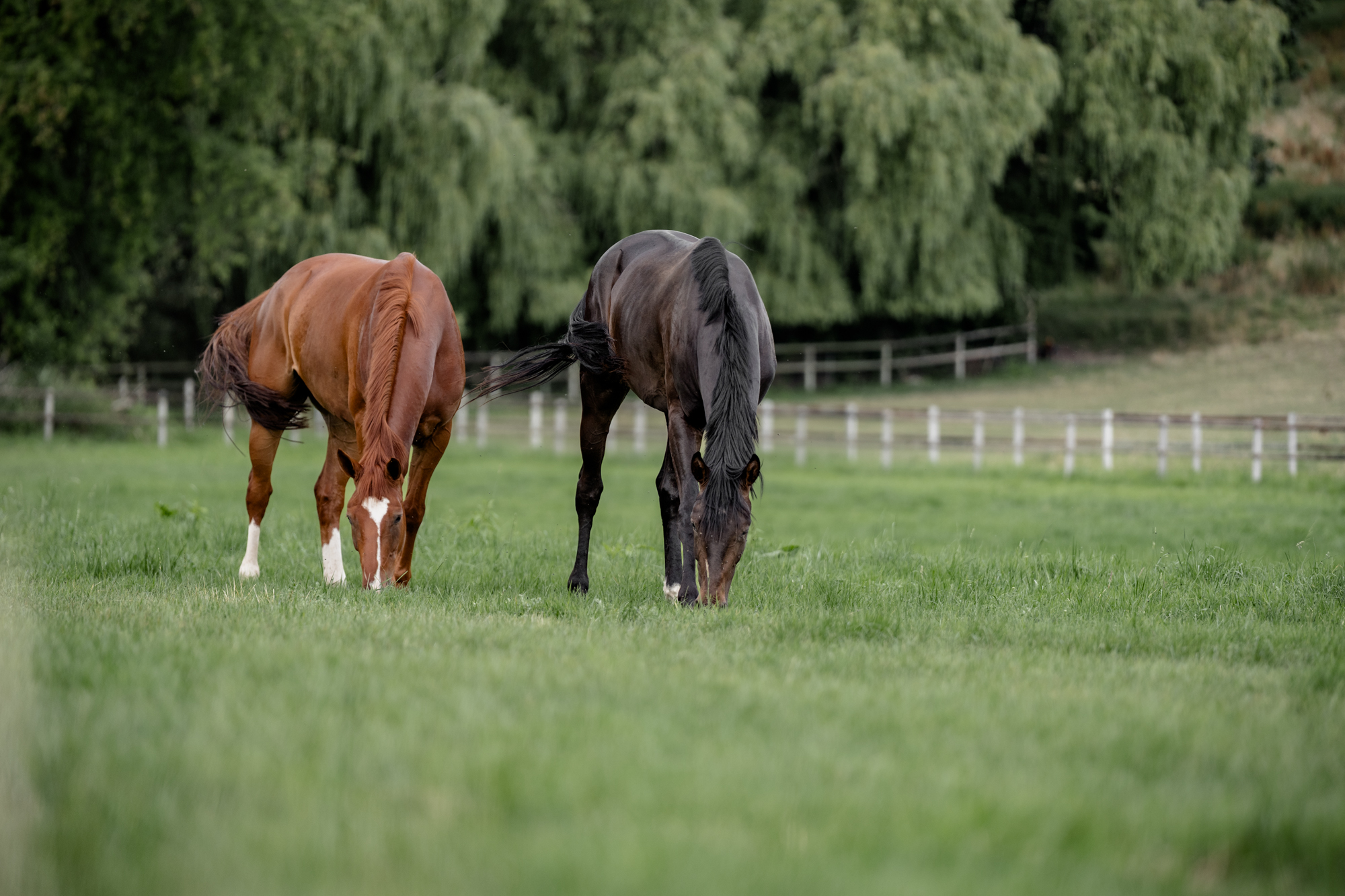
The horse’s relatively small stomach, which only holds around 15 liters, is designed for continuous feed intake. In contrast to other animals and us humans, stomach acid is constantly produced in the horse’s stomach. This means that instead of large meals, your horse needs frequent, small portions of feed. Long breaks between meals can lead to hyperacidity in the stomach, as there is no feed slurry to neutralize the stomach acid. And this in turn can increase the risk of stomach ulcers developing.
Small and large intestine: center of nutrient absorption and home of the intestinal flora
At around 24 meters long, the small intestine is the main place for the absorption of nutrients, while the large intestine with cecum processes the fibre through bacterial fermentation. This is where the so-called intestinal flora is found, a complex community of beneficial microorganisms that play a crucial role in digestion and the immune system.
Intestinal problems in horses: causes and challenges
Intestinal problems in horses are often caused by a sensitive imbalance in the digestive system. The most common
Triggers are:
- Stress
- Unbalanced feeding
- and lack of exercise.
Stress in particular – for example due to a change of stable, transportation or social unrest – can increase the production of stomach acid and throw the entire gastrointestinal tract out of balance. A carbohydrate-rich diet, for example with large amounts of grain or sugary feed such as molasses, can also have a negative impact on the natural intestinal flora.
The result: fermentation processes, flatulence or a tendency to colic, which can develop into serious intestinal problems in the
horse in the long term.
Tips to support intestinal health and build up intestinal flora in horses
A healthy, individually adapted and balanced diet is the be-all and end-all for a stable gastrointestinal tract. You should pay attention to these points:
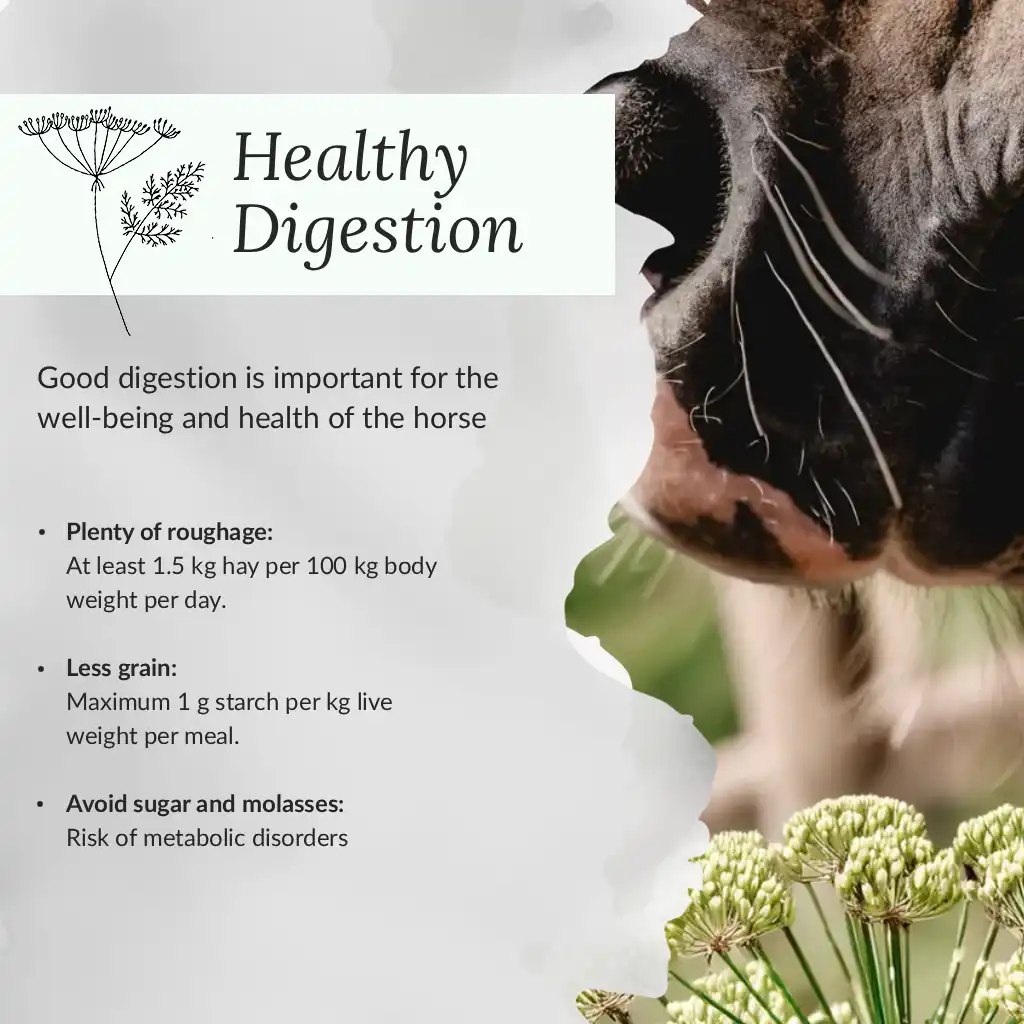
- Sufficient roughage: Hay and grass should form the main part of the diet, with at least 1.5 kg hay / 100 kg body weight per day. Ideally by means of small rations distributed throughout the day.
- Reduce grain: The high starch content in grain puts a strain on the intestines and can lead to colic and should therefore be limited to a maximum of 1g starch / kg live weight and meal. Alternatively, high-fat foods such as oils are a good source of energy.
- Avoid sugar and molasses: Sugar is broken down quickly and leads to rapid absorption of glucose in the small intestine and a rapid blood sugar spike, which in the long term increases the risk of metabolic disorders such as laminitis and equine metabolic syndrome (EMS). The fermentation of unabsorbed sugar promotes the proliferation of undesirable intestinal bacteria in the large intestine.
- Stress reduction: A stable stable environment, regular feeding times and subsequent rest periods as well as regular exercise promote healthy digestion.
- Feed supplements: Feed supplements can also support the maintenance of healthy gastrointestinal health.
EQUISOLVAN®DIGEST: Support for your horse's gastrointestinal tract
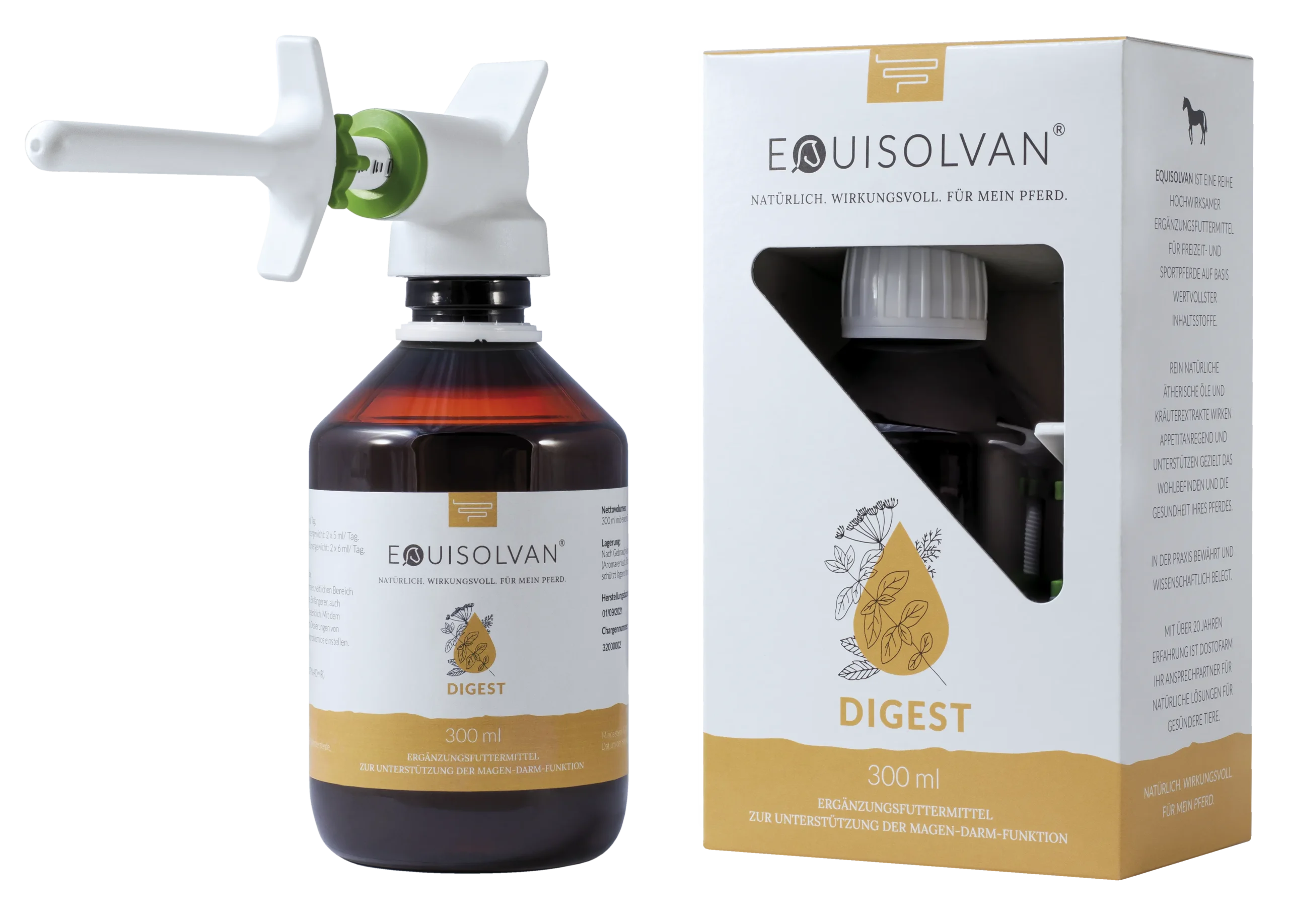
Especially in stressful phases, EQUISOLVAN®DIGEST can help to maintain the balance of the intestinal flora and thus promote your horse’s digestion and general well-being.
Conclusion on intestinal health in horses:
With these measures, you can actively contribute to your horse’s intestinal health and support its vitality in the long term
. After all, healthy digestion is the basis for your horse’s well-being.