Deworming horses is one of the most important health measures in horse husbandry. However, whilst it used to be standard practice to deworm three to four times a year, our understanding of the matter has changed.
We now know that intelligent parasite management involves more than just routine worming treatments. It requires in-depth knowledge of parasites, targeted diagnostics and – most importantly – natural support for the horse’s gut during and after treatment.
This article shows you how to deworm horses correctly, avoid resistance and, at the same time, promote the long-term gut health of your animals.
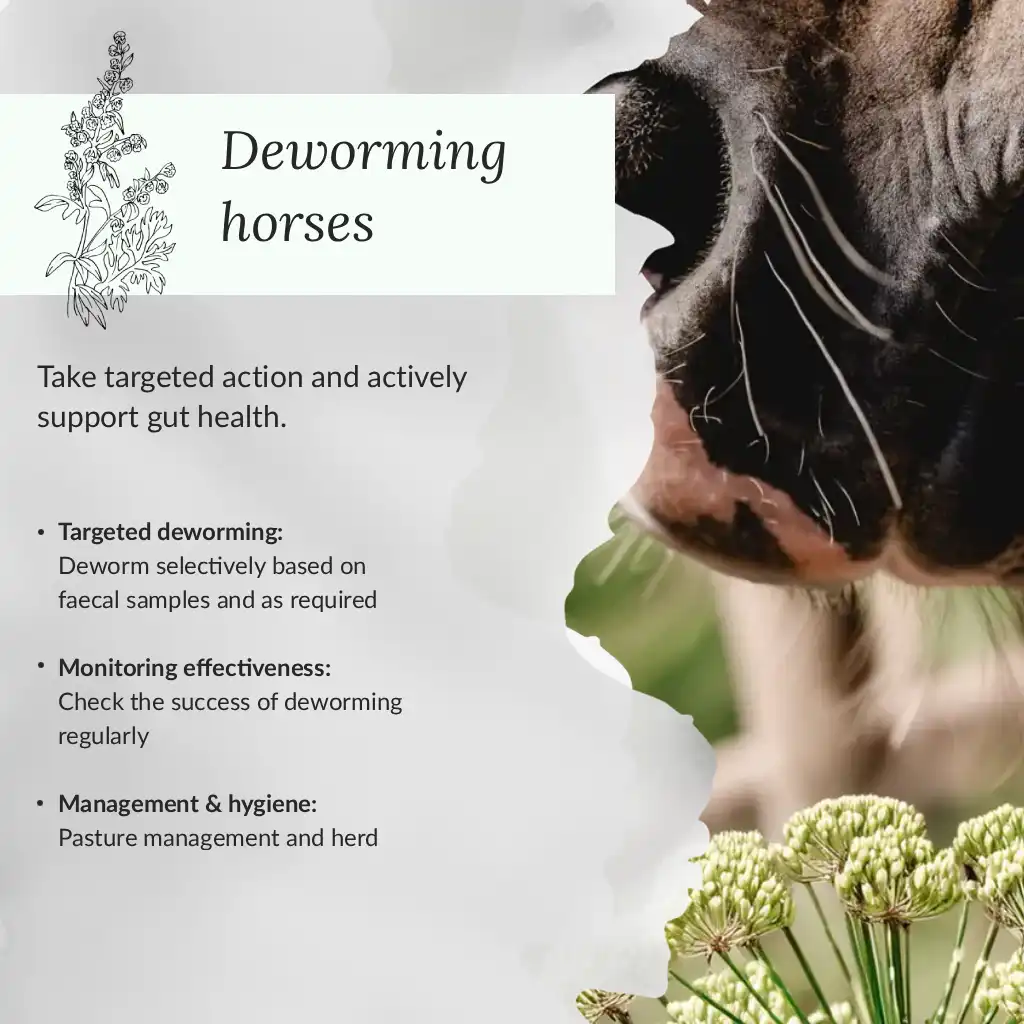
Why modern deworming strategies are essential
Parasites such as strongyles, roundworms and tapeworms are a natural part of keeping horses. A certain level of worm infestation is normal and is usually well tolerated by healthy horses. However, problems arise in cases of severe infestation or when the wrong deworming strategies are used.
The challenge: decades of blanket deworming without diagnosis have led to a dramatic rise in resistance. In many regions, small strongyles already show over 50 per cent resistance to pyrantel. In roundworms, the first cases of resistance to ivermectin have been detected – particularly alarming as foals are especially affected. If parasites become resistant to all available classes of active ingredients, horses will no longer be treatable.
At the same time, we now know that worming treatments affect not only the parasites but also the beneficial gut flora. The gut is home to millions of microorganisms that are essential for digestion, nutrient absorption and immune defence. After each deworming, the gut flora needs two to four weeks to regenerate – a phase during which the horse requires special support
An overview of the most common parasites in horses
To deworm horses properly, you need to be familiar with the main parasites and their effects:
- Small strongyles (Cyathostominae): The most common and economically significant parasites. Around 50 different species live in the caecum and large intestine. Particularly dangerous: larval cyathostomiasis, in which masses of encysted larvae burst through the intestinal wall and can cause severe, life-threatening diarrhoea.
- Large strongyles: Rare today, but extremely dangerous. The larvae migrate into the arteries of the intestine and can cause blood clots, intestinal necrosis and fatal colic.
- Roundworms (Parascaris spp.): The main problem in foals and young horses up to four
years old. Adult worms grow up to 50 cm long and, in extreme cases, can cause intestinal blockages. The migration of larvae through the lungs and trachea leads to coughing and developmental disorders. - Tapeworms: In Germany, 15 to 30 per cent of all farms are affected. Tapeworms are found at the junction of the small intestine and the caecum and can cause inflammation, intestinal blockages and colic.
- Horse botflies: Largely harmless, but very troublesome. The characteristic symptom is intense tail rubbing due to night-time egg-laying around the anus.
- Stomach botflies: Larvae of the botfly, which remain in the stomach for eight to ten months and cause erosion of the gastric mucosa.
Selective vs. strategic deworming: Which is the right approach?
Selective deworming (for adult horses aged 5 years and over only): This method is based on the finding that 80 per cent of worms live in just 20 per cent of horses. Through regular faecal examinations (McMaster method), only horses with an egg count exceeding 200 EPG (eggs per gram of faeces) are treated. Horses with low egg counts remain untreated and form an important ‘refuge’ – their worms dilute the resistance genes in the population.
Procedure:
- Year 1: Four faecal examinations between April and November
- From Year 2: Three faecal samples if the herd is stable
- Regardless of the result: An annual preventive worming treatment (usually at the end of the year)
Strategic worming (age-dependent): Based on ESCCAP guidelines, treatment is differentiated by age.
- Foals: Worm three to four times a year (Risk of roundworms!)
- Yearlings to 4 years: Two to three times a year
- Adult horses aged 5 years and over: At least twice a year (one to two months after turning out to pasture and when brought back in)
Crucial: A faecal sample must be taken 14 days after each treatment to check efficacy. This is the only way to detect any resistance in good time.
Natural plant-based remedies for the horse’s digestive system: oregano and wormwood
Nature provides effective aids to support the horse’s gut during deworming.
Oregano oil (Origanum vulgare): The essential oils in oregano – particularly carvacrol and thymol – have been known for centuries for their beneficial properties. Oregano oil has the following effects:
- Antimicrobial: Supports a healthy gut environment
- Digestive: Stabilises gastrointestinal function
- Appetite-stimulating: Important in cases of worm-related loss of appetite
- Antioxidant and anti-inflammatory
One drop of oregano essential oil contains 50 to 200 times the amount of active ingredients compared to dried herbs – a highly concentrated, natural aid.
Wormwood (Artemisia absinthium) – the traditional ‘worm herb’: Wormwood owes its common name to its long history in parasite control. The bitter compounds it contains (absinthin, with a bitterness value of around 20,000) and essential oils have the following effects:
- Appetite-stimulating: Bitter compounds stimulate the production of saliva and gastric juices
- Digestive aid: Stimulate the secretion of bile and pancreatic juices
- Anti-parasitic intestinal environment: Bitter compounds create conditions that are unfavourable for parasites but beneficial for gut health
- Liver-protective: Supports metabolism and detoxification following worming treatments
The combination of oregano oil and wormwood extract produces synergistic effects: oregano stabilises and promotes feed intake, whilst wormwood optimises the intestinal environment and strengthens the natural defences.
EQUISOLVAN® VERMIPLUS: Natural support for worming
When you deworm your horse, you not only want to eliminate the parasites, but also ensure that your horse tolerates the treatment well and recovers quickly. This is where EQUISOLVAN® VERMIPLUS comes in.
What is EQUISOLVAN® VERMIPLUS?
The four key benefits of EQUISOLVAN® VERMIPLUS:
- Stabilisation of gastrointestinal function: VERMI PLUS supports the intestinal flora before, during and after worming. It helps to maintain digestion and nutrient absorption even under stress.
- Appetite stimulation: Infected or recently dewormed horses often show a reduced appetite. The oregano oil it contains naturally stimulates the appetite and promotes feed intake – the basis for rapid recovery.
- Natural, worm-unfriendly intestinal environment: The combination of wormwood bitter compounds, clove and lemongrass oil creates an intestinal environment that promotes gut health whilst simultaneously creating conditions unfavourable to parasites.
- Support during periods of stress: Every deworming treatment places stress on the organism. VERMIPLUS naturally reduces this stress on the body. Horse owners report that their animals appear more lively and recover more quickly.
Administration and dosage:
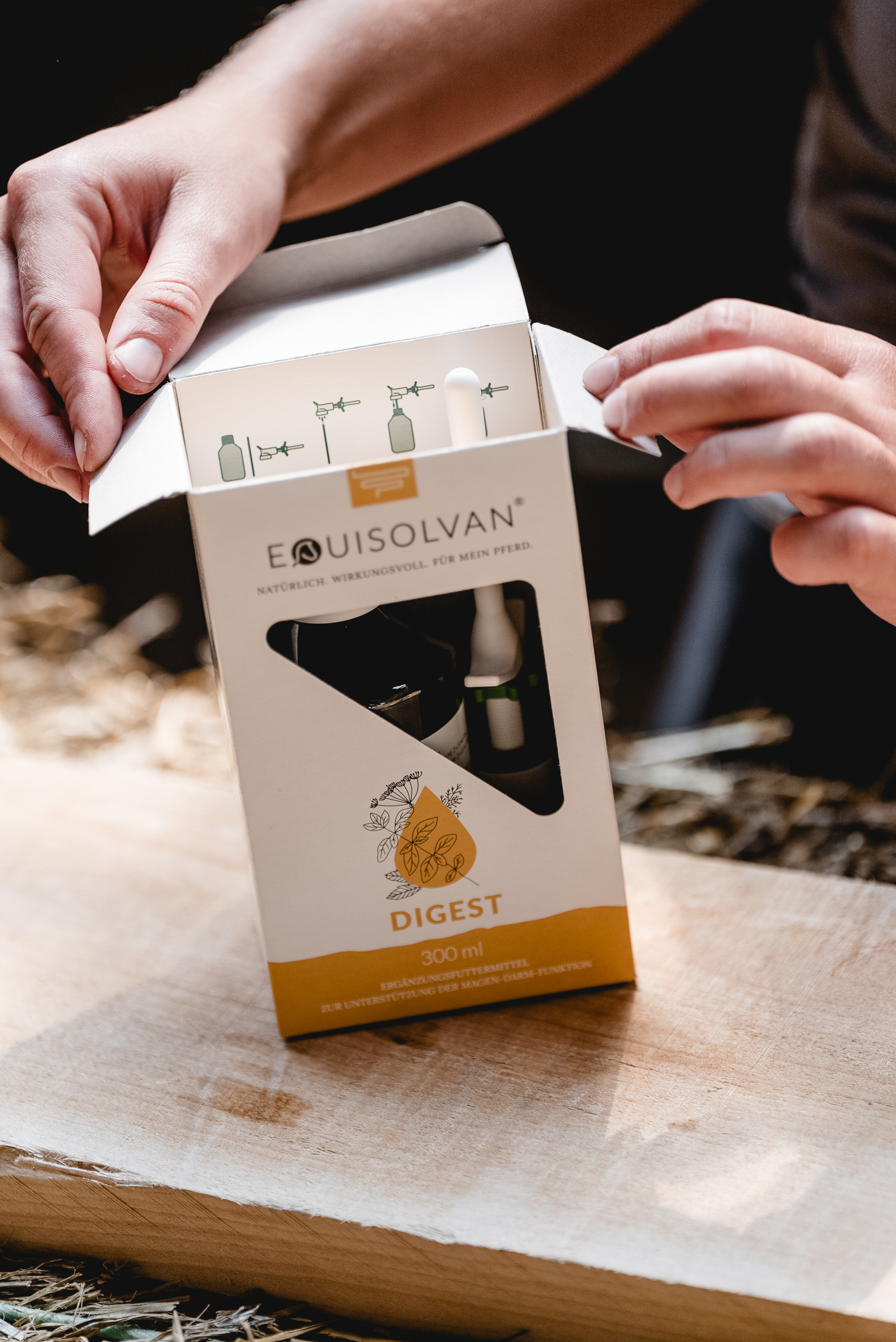
EQUISOLVAN® VERMIPLUS is administered directly into the mouth using a handy dispenser or added to the feed. The dosage depends on the size of the horse:
- Ponies/small horses: 6 ml daily
- Large horses up to 600 kg: 2 x 5 ml daily
- Large horses over 600 kg: 2 x 6 ml daily
When to administer?
- Preventative/course of treatment: At least 7 days, several times a year to maintain healthy gastrointestinal function
- Before deworming: Start a few days beforehand to prepare the gut optimally
- During deworming: Continue to administer continuously
- After deworming: Continue for at least 2 days, preferably 2 weeks, to rebuild the intestinal flora
Benefits for the practice:
- Extremely palatable – readily accepted by horses
- Easy to use with a practical dispenser
- No withdrawal period – purely natural ingredients without medicinal substances
- Suitable for all age groups (from foals to seniors)
- Withdrawal period according to FN-ADMR: 48 hours
EQUISOLVAN® VERMIPLUS is not a substitute for a worming treatment, but the ideal natural supplement in modern parasite management. It supports your horse where conventional worming products cause stress.
Holistic parasite management: Practical implementation
- Faecal analysis as a starting point: Have a faecal sample analysed before every deworming treatment. This ensures you only deworm when necessary and with the correct active ingredient.
- Targeted treatment: Choose the active ingredient based on the identified worm species and take into account known resistances in your region.
- Efficacy check: 14 days after treatment: Take another faecal sample to check the results. This is the only way to detect resistances in good time.
- Natural support: Administer EQUISOLVAN® VERMIPLUS before, during and after the worming treatment to stabilise gut health.
- Pasture hygiene: Collect faeces from the pasture at least twice a week. Avoid overgrazing and rotate pastures regularly.
- Quarantine for new horses: Only integrate new herd members after a negative faecal sample.
Frequently asked questions about deworming horses Replaced
No. VERMIPLUS is a feed supplement that supports gastrointestinal function during the worming process. It is not a substitute for veterinary worming treatment.
How often should I deworm my horse?
That depends on the horse’s age. Adult horses aged 5 years and over should ideally be dewormed using the selective approach – based on faecal samples. At least twice a year is standard. Foals and young horses require more frequent treatments.
How can I tell if there is resistance?
By checking efficacy 14 days after treatment. If egg excretion has not been significantly reduced (by at least 90 per cent), resistance is likely to be present.
Can I feed VERMIPLUS on a long-term basis?
VERMIPLUS is designed for use as a course of treatment. Several times a year for at least 7 days at a time, as well as specifically around worming dates.
Investing in long-term horse health
Deworming horses is much more than just a routine procedure. It forms part of a holistic approach to health management that combines sound knowledge, targeted diagnostics and natural support.
Would you like to find out more about Equisolvan and how it can benefit your horse? Please feel free to contact us!
Or are you interested in our range of products designed to promote equine health?
Click here to visit our online shop!