


Why the nutrition of senior horses needs special attention and how they can be supported according to their needs:
As horses get older, their metabolism and digestion change. These changes require adapted feeding, from easily digestible roughage and high-quality nutrients to the targeted use of feed supplements. Many older horses become unbalanced more quickly due to feeding errors. These are often avoidable causes such as inadequate roughage quality or concentrated feed, which puts more strain on the digestive tract than it benefits. The horse’s body reacts more sensitively to such influences as it gets older. A well-coordinated diet that takes individual needs into account can therefore make a decisive contribution to well-being.
The changes in old age
As horses get older, not only do their bodies change, but also their functions. Metabolism and digestion work more slowly, making it harder for nutrients to be absorbed and utilized.
Energy requirements change and dental problems can further restrict chewing performance and therefore feed intake. Age-appropriate feeding that takes these changes into account can support the health of older horses in a needs-oriented and targeted manner.
Roughage as a basis
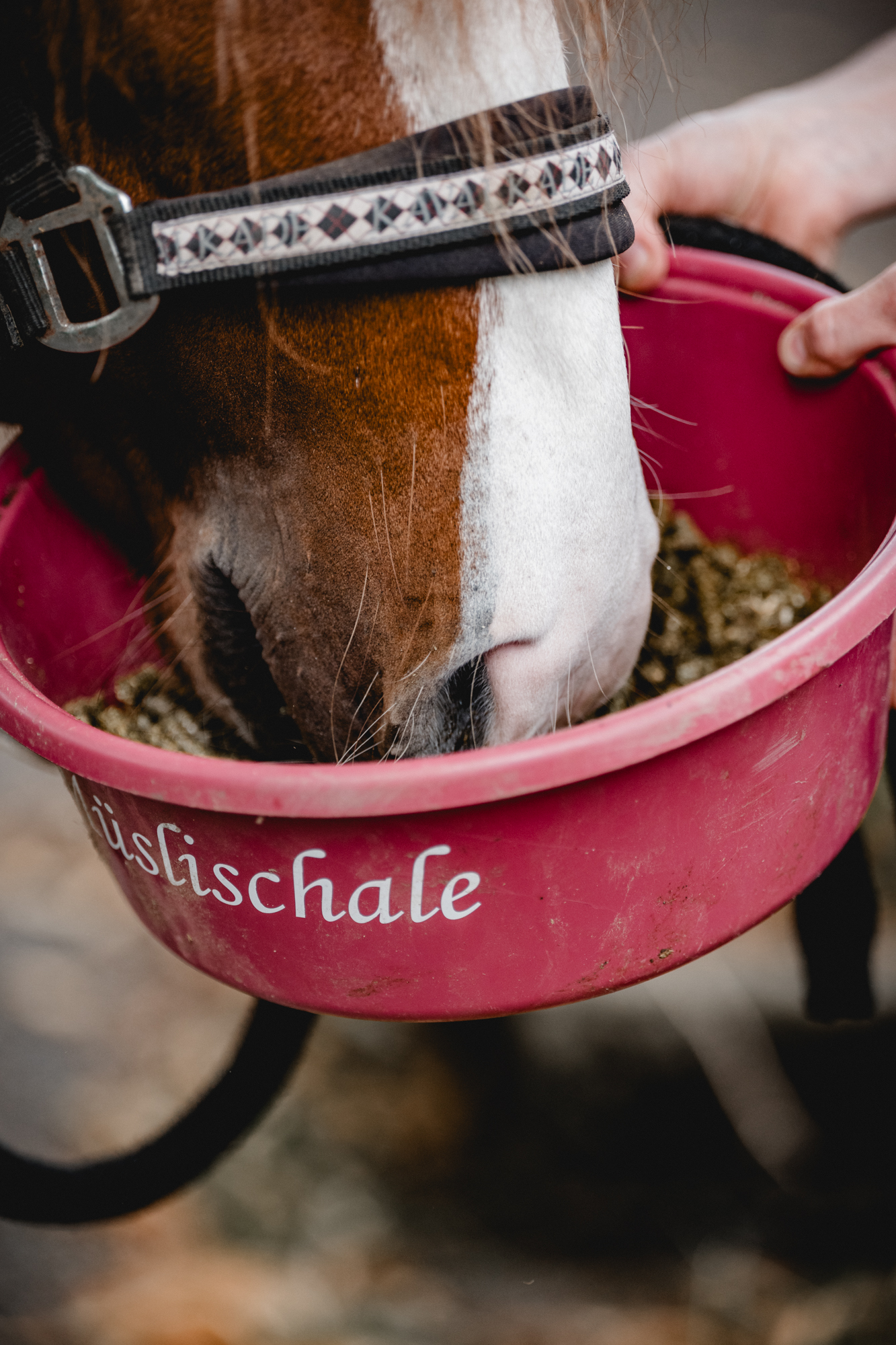
Regardless of age, however, high-quality roughage remains the basis of good feeding. As the digestibility of feed is often limited in older horses, the quality of the roughage plays an even greater role. Horses with dental problems benefit from alternatives such as hay cobs or meadow cobs, which are easier to absorb and better utilized. In this way, the daily roughage requirement can be reliably covered.
The right amount to feed older horses
As horses get older, it is not only what they are fed that plays an important role, but also how they are fed. The digestive tract is less efficient and reacts more sensitively to larger amounts of feed. Adapted feeding, in which roughage is easily accessible and available in sufficient quantities without overloading the horse with large portions, supports healthy digestion in older horses.
Special health factors of older horses
Older horses often experience health changes that need to be taken into account when feeding. Dental problems, metabolic diseases, joint stress or reduced mobility affect the nutritional requirements and should be taken into account when designing the ration. It is worth taking a close look at the individual requirements to ensure that older horses are also adequately nourished. An adapted ration, easily chewable and digestible crude fiber sources and regular veterinary checks support their organism and help to support and maintain their well-being even in senior age.
Sensible use of feed supplements
Supplements can provide support where the normal feed no longer covers all needs. However, it is important to use them selectively and with caution and not to substitute blindly. Excessive use can put significant strain on the organs. Products that stabilize digestion or relieve the metabolism can be useful for older horses. These include natural oils and plant extracts that support gastrointestinal function and the intestinal environment. High-quality fatty acids can also help if energy requirements and utilization are no longer in balance.
The following also applies to older horses: supplementary feeds are no substitute for high-quality basic feeds, but can make a valuable contribution to keeping horses healthy if they are used correctly.
Important nutrients for older horses
A needs-based supply of important nutrients plays a central role in old age. Metabolism, intestinal activity and nutrient utilization change with increasing age. Targeted adaptation of the feed supports the vitality and performance of older horses.
Targeted supplementation of trace elements
Trace elements perform a variety of tasks in the organism and should be given special consideration in senior feed:
- Zinc supports the skin, coat and immune system.
- Selenium helps to stabilize the muscles.
- Copper is important for connective tissue and various metabolic processes.
A balanced diet helps to prevent loss of substance and promote natural resistance.
Consider changes in the vitamin balance
The activity of the intestinal flora can decrease with age. This reduces the body’s own production of certain vitamins.
An adapted vitamin supply helps to balance out the changed requirements and stabilize metabolic functions.
Minerals in the right proportion
In addition to trace elements and vitamins, minerals also play a decisive role. These are particularly important:
- A balanced ratio of calcium and phosphorus to support bones and metabolism
- Adequate sodium intake for a stable electrolyte balance
A targeted supply of minerals therefore supports bone health and contributes to a balanced metabolism.
Natural support for older horses
The foundation of age-appropriate feeding
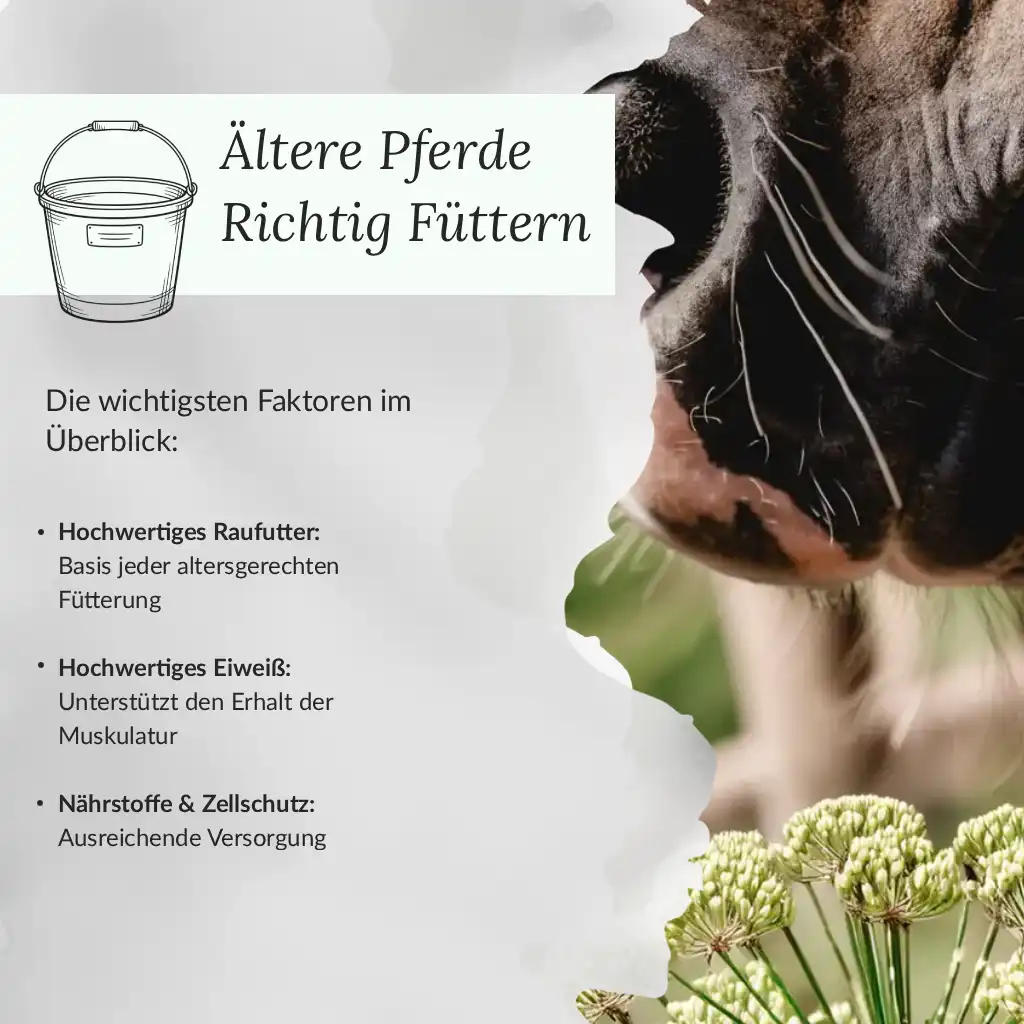
A high-quality roughage base, adapted feed quantities and easily digestible crude fiber form the basis of feeding for senior horses. This is supplemented by a needs-based supply of minerals, trace elements and vitamins.
High-quality, easily utilizable protein also becomes more important in old age. It helps to maintain muscle and body condition.
Antioxidants also play an important role. They support the body in balancing out age-related oxidative stress – a property that can also be specifically supported by selected feed supplements such as our EQUISOLVAN® products.
Targeted support through feed supplements
Supplementary feed can help to stabilize the body, especially in sensitive phases. Our EQUISOLVAN® products offer natural ingredients that are tailored to the needs of horses:
- EQUISOLVAN® RESPIREPLUS supports the respiratory tract.
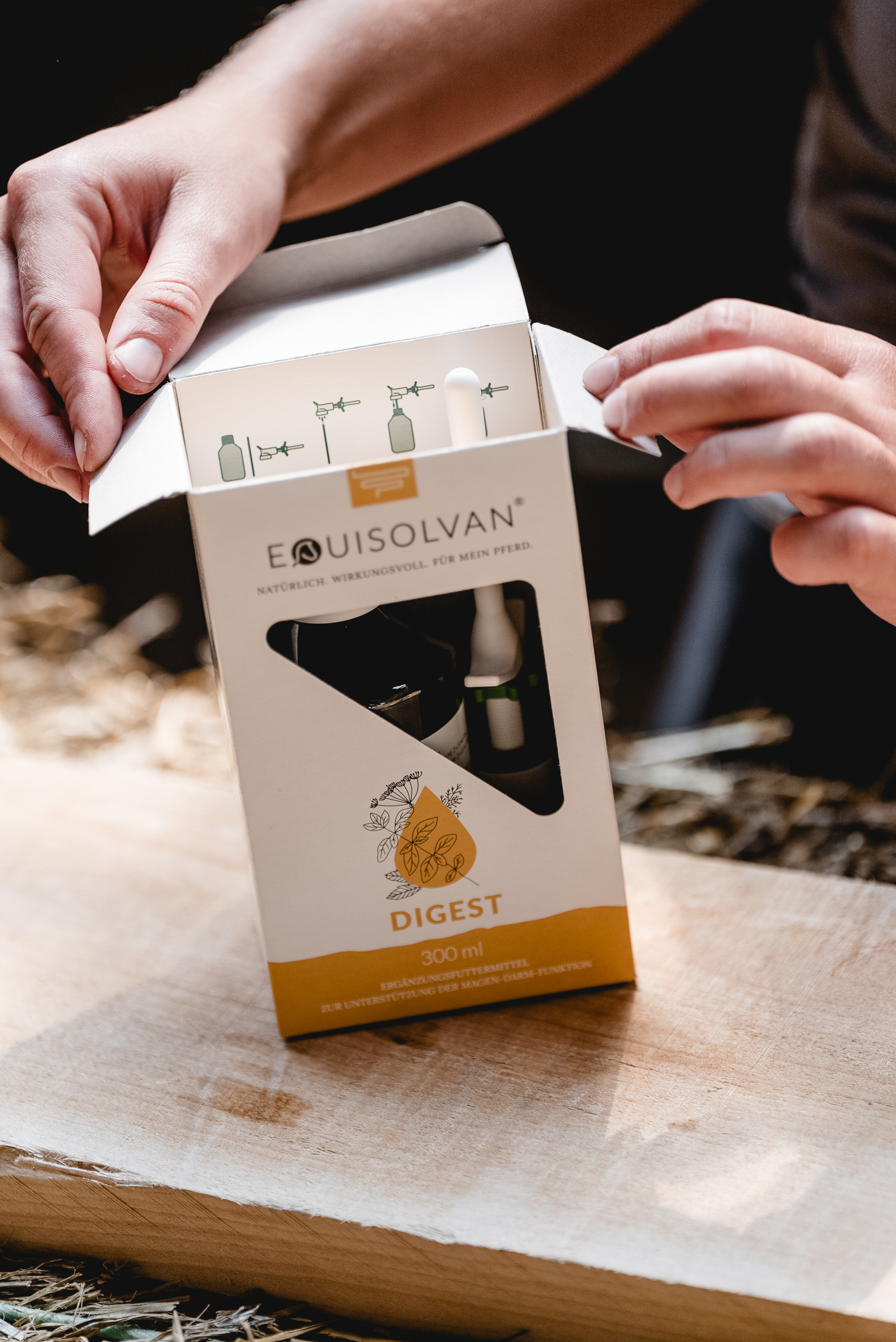
- EQUISOLVAN® DIGEST contributes to the stabilization of a sensitive gastrointestinal tract.
- EQUISOLVAN® VERMIPLUS accompanies the worming treatment and promotes a balanced intestinal environment.
This allows the feeding of older horses to be specifically supplemented and adapted to individual requirements. Regular observation of the horse remains crucial. Changes should be recognized at an early stage and clarified by a vet if there are any uncertainties.
Practical examples from everyday stable life
The fact that needs-based feeding can make a difference in old age is also evident in everyday stable life:
Jo reports that her 30-year-old Fjord gelding Olli with a chronic cough was helped by EQUISOLVAN® RESPIREPLUS to cough up mucus more easily.
Targeted support can also be useful for sensitive seniors in the gastrointestinal area. Renate uses EQUISOLVAN® DIGEST via oral syringe with her fussy senior Dartagnon to stabilize his gastrointestinal tract in sensitive phases.
Such examples show how individual feeding and suitable supplements can work together in everyday life to maintain the long-term well-being of older horses.