


The horse’s airways are particularly sensitive – they react sensitively to ammonia,
mold or a lack of air circulation. Even the smallest stimuli can cause coughing or a
respiratory disease in horses. However, targeted measures in husbandry and
feeding can prevent respiratory problems and alleviate existing complaints.
In this article, you will learn how your horse’s airways are structured, which factors lead to
respiratory diseases and what measures you can take to actively support respiratory health
.
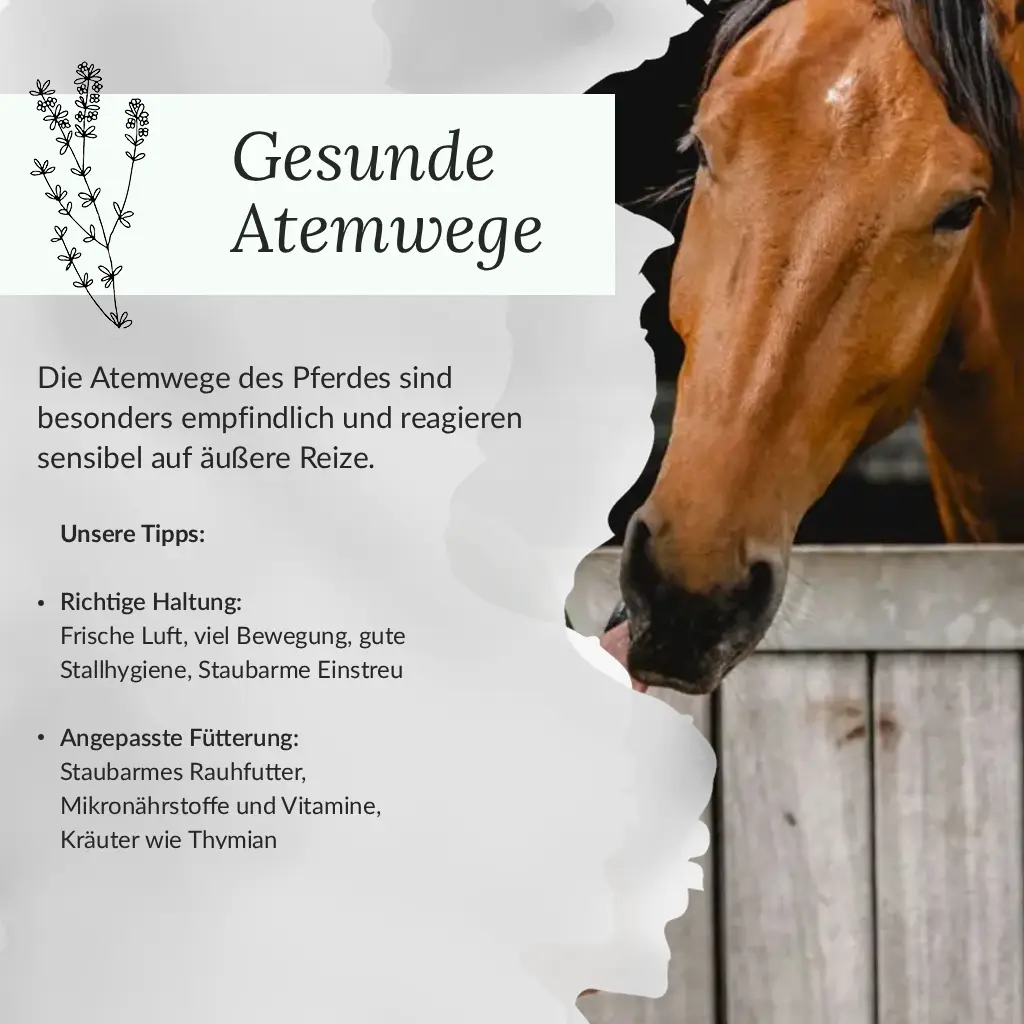
How are the horse's airways structured?
In order to better understand respiratory diseases, it is worth taking a look at how the respiratory system works.
The upper airways are made up of:
- Nostrils,
- Nostrils,
- paired nasal cavity with turbinates,
- Paranasal sinuses,
- Pharyngeal cavity,
- Air sacs and larynx.
The deep airways include:
- Trachea,
- Lungs with bronchi and alveoli (pulmonary alveoli).
How does the horse's airway work?
The horse breathes in air through its nostrils. The mucous membrane of the respiratory tract has the function of warming, cleaning and moistening the inhaled air. To do this, it has a so-called ciliated epithelium on its surface. These are hair-shaped cells that resemble a brush border and lie on the mucous membrane like a carpet. So-called goblet cells sit between the hairs and produce a thin layer of mucus that lies on the ciliated epithelium. This allows dust, bacteria and fungi to be bound and the finest foreign bodies to be transported out of the airways.
Air purification and protective mechanisms of the respiratory tract
Depending on where in the respiratory tract the air purification takes place, the foreign bodies are directed outwards towards the nostrils or inwards towards the pharyngeal cavity. At the point where the respiratory and digestive tracts meet, the transported particles are then removed via the esophagus.
From the larynx to the lungs: the path of breathing air
Next, the air flows past the larynx into the windpipe. This can be up to one meter long and has a diameter of around five centimetres.
Bronchi and alveoli: The site of gas exchange
From there, the air flows on to the bronchi in the lungs, which are divided into many small branches and resemble the structure of a tree. Small bronchioles can be found at these branches, which are filled with alveoli at their ends. The alveoli are around 0.15 millimetres in size and are surrounded by a fine network of capillaries, creating a huge total surface area. This is where gas exchange takes place, with oxygen drawn from the air being absorbed into the blood via the lungs and carbon dioxide being released at the same time. The large surface area of the lungs makes it possible to exchange a lot of gas at the same time.
How can you optimize housing conditions to promote respiratory health at ?
An intact respiratory system alone is not enough to keep the respiratory tract healthy in the long term – the external conditions must also be right. Horses are particularly sensitive to dust, ammonia and mold spores. That’s why species-appropriate husbandry with plenty of fresh air, sufficient exercise and consistent stable hygiene is essential for your horse’s well-being and lung function.
Tips for a posture that protects the airway:
- Prefer open stable or box with outside window and paddock
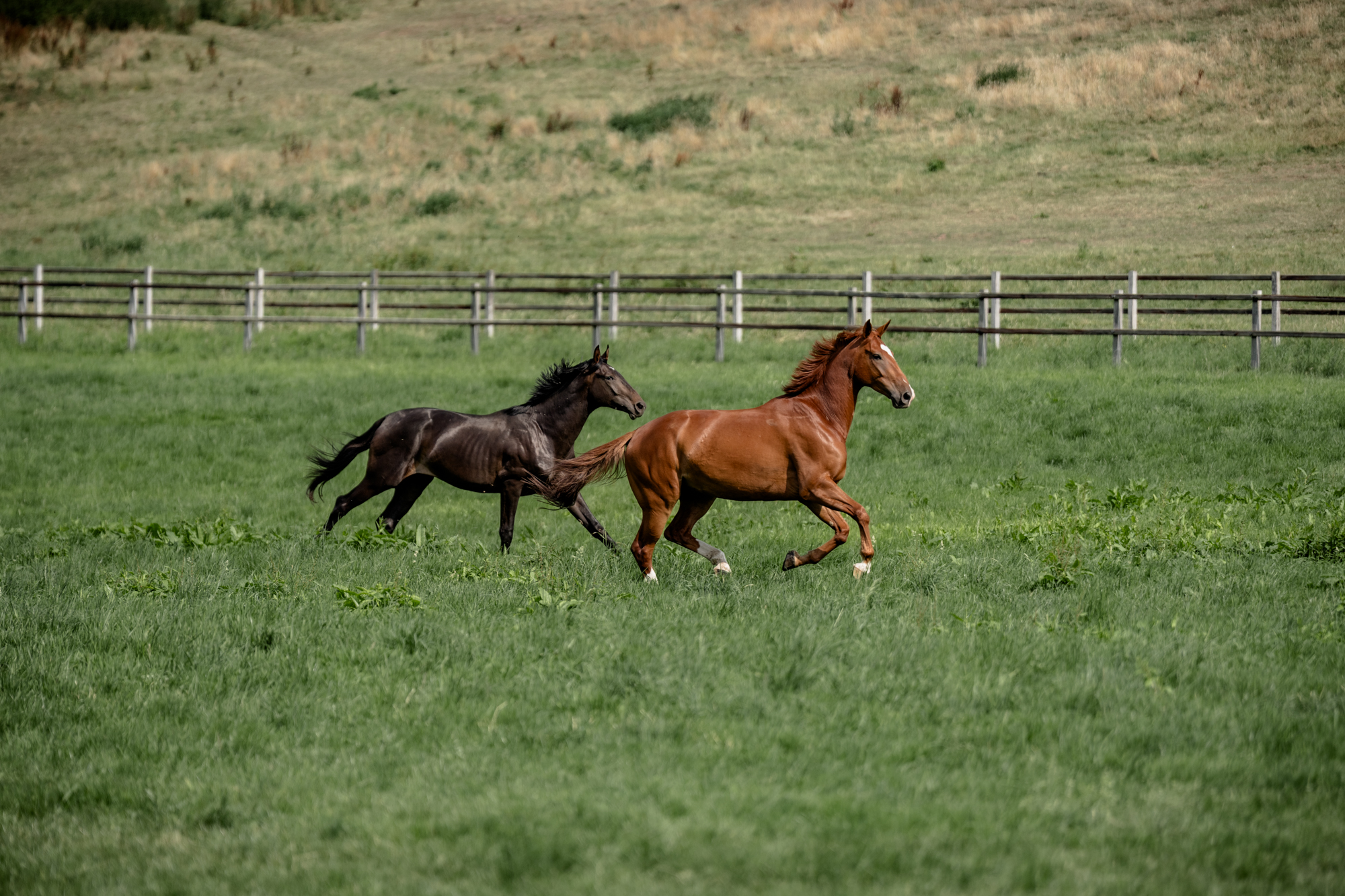
- Allow daily grazing or plenty of outdoor exercise
- Muck out boxes daily to reduce ammonia pollution
- Take the horse out of the stable lane during stable work such as sweeping or mucking out
- Use low-dust bedding such as shavings or pellets
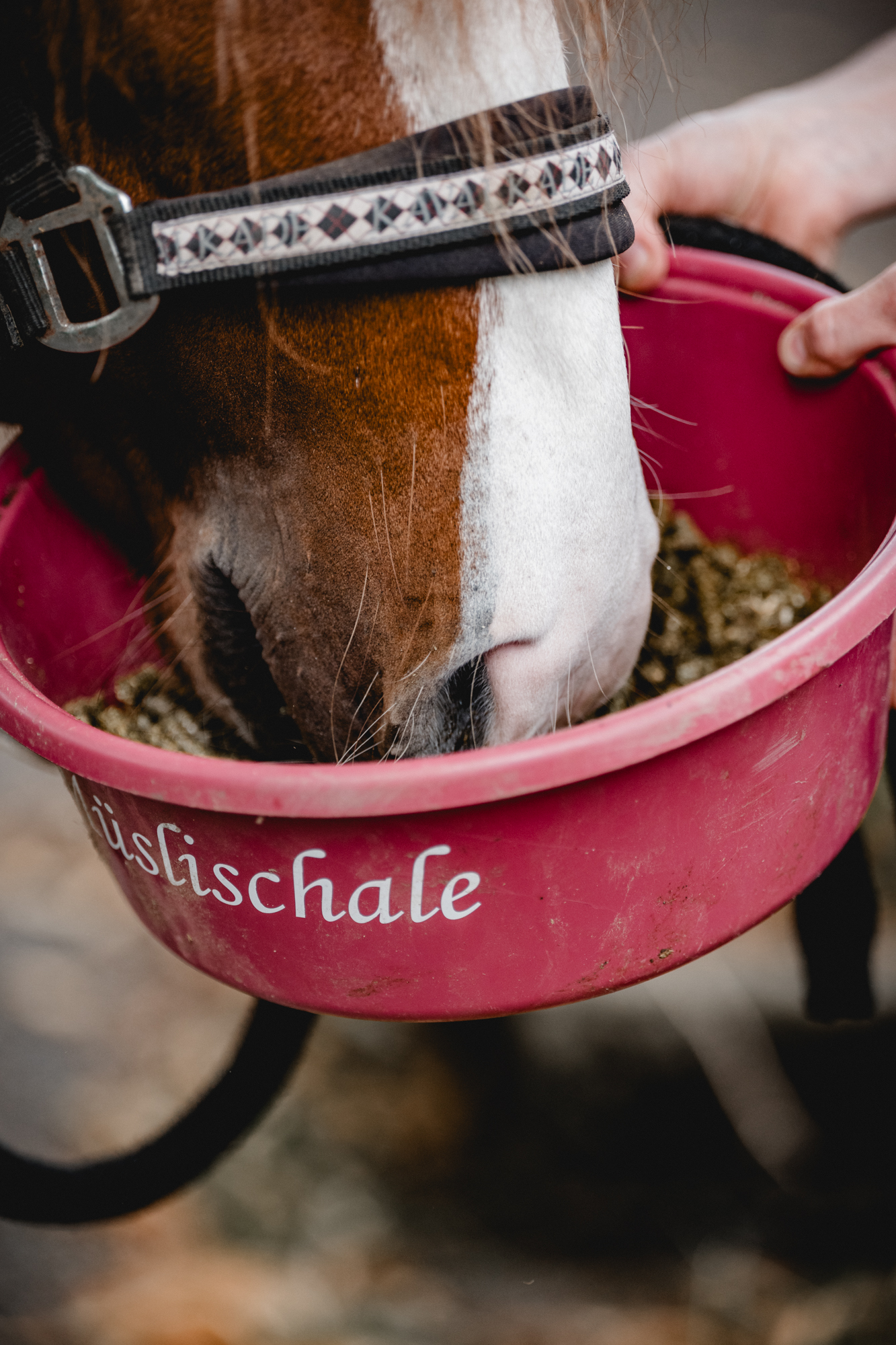
- Clean feeding and drinking bowls regularly to prevent mold growth
How can you adapt the feed to optimally support the airways?
The same applies to feeding: a low-dust and hygienic approach is crucial to avoid putting additional strain on your horse’s sensitive airways. Even small adjustments to roughage and concentrated feed can have a big effect.
- The following always applies to roughage: it must be clean, low in dust and free of mold! This is because
mold spores are poison for the horse’s sensitive lungs. - To reduce the dust load in the roughage, it can be useful to replace hay with
wet or steamed hay or haylage. - For particularly sensitive horses, the concentrated feed should also be mixed with some liquid
to bind the dust. - To reduce the bacterial load in the hay, it can be moistened with a solution of essential
oregano oil.
Micronutrients for strong airways and more vitality
Various trace elements and vitamins can contribute to maintaining the health of the respiratory tract on several levels and promote the general vitality of your horse:
- Zinc and manganese: support a stable metabolism and promote the natural elimination of unwanted substances.
- Copper: contributes to the function and regeneration of the ciliated epithelium – important for self-cleaning of the airways.
- Iron and B vitamins: support the formation of oxygen-rich blood flow and thus physical performance.
- Thyme, aniseed, licorice root and black cumin: support respiratory health and strengthen the body’s natural defenses.
Thyme for horse coughs and to stabilize respiratory function
Thyme essential oil is known for its secretion-dissolving properties. It supports the natural processes of the respiratory tract by helping to loosen stuck mucus. Thyme can help to stabilize respiratory health, particularly in cases of cough irritation, irritation caused by stable dust or during the winter months.
Thanks to its soothing and nourishing effect on the mucous membranes, thyme is a proven companion for horse coughs – for both leisure and sport horses.
Feeding thyme to your horse - the right way to do it
You can make thyme tea for your horse – just like we humans do. However, not every horse finds the brew appetizing. The tea is particularly suitable for respiratory problems or coughs, as it can also soothe your horse’s airways. If your horse doesn’t like the tea, thyme can also be fed in pellet form or as loose herbs.
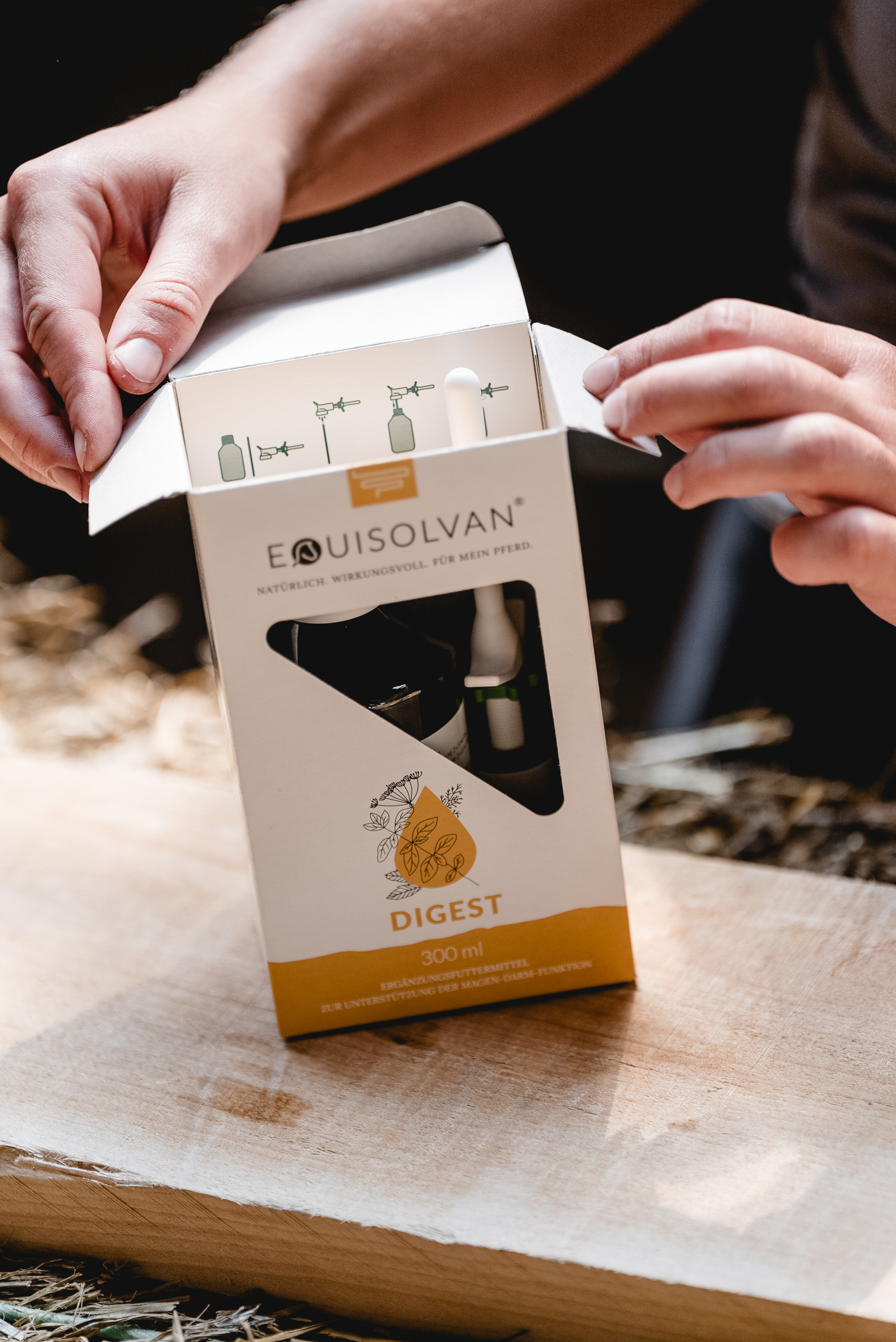
Our product EQUISOLVAN ® RESPIRE PLUS offers an additional option for administering the natural mucolytic thyme. It consists mainly of thyme essential oil and also contains aniseed oil and licorice root extract, which makes it extremely palatable. It is also easy and safe to use with the dosing device and thus promotes your horse’s well-being and performance.
When using the product, always select the dosage according to the manufacturer’s instructions. Also important: Observe a waiting period of at least 48 hours before competitions – as recommended by the German Equestrian Federation (FN).
Good to know:
Thyme is harvested during flowering and the essential oil is extracted. The content of the individual components of thyme can vary greatly depending on the flowering period, region and climate.
This makes it all the more important to only feed thyme from reliable, reputable cultivation. We only source our thyme essential oil from a certified supplier to ensure consistently high quality and safety.
EQUISOLVAN® RESPIREPLUS support for your horse's airways
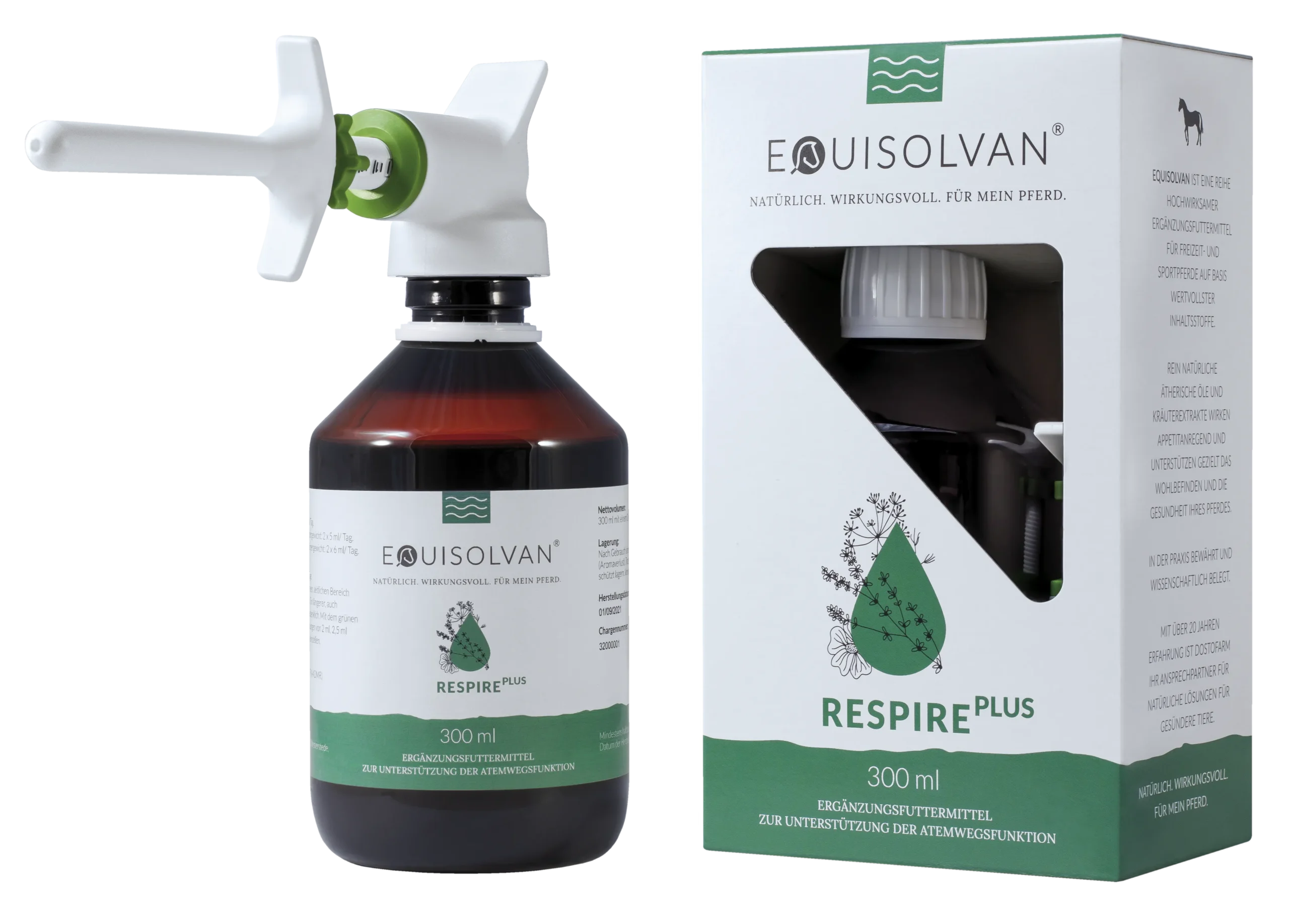
Our product EQUISOLVAN® RESPIREPLUS offers you one way of administering these herbs.
This is a concentrated feed supplement with high-quality essential oils and plant extracts to support your four-legged friend’s respiratory tract. It consists of thyme and aniseed oil as well as licorice root extract.
By administering the product into the horse’s mouth with the dosing syringe, it can be absorbed directly via the mucous membranes and have a calming effect on the respiratory tract. Alternatively, it can be precisely dosed and neatly applied to the crib feed via the syringe.
The advantages of EQUISOLVAN® RESPIREPLUS at a glance:
- Contains purely natural essential oils
- Supports the respiratory health of your horse
- Particularly easy to use thanks to the dispenser
- Developed by DOSTOFARM® – with over 25 years of experience
Conclusion - Healthy airways in horses
By considering the right housing conditions and feeding, you can make a significant contribution to your horse’s respiratory health. Small adjustments in everyday life can make a positive difference and contribute to the general health of your four-legged friend.