
When a horse paces restlessly in its stall, rolls around or refuses to eat, alarm bells immediately start ringing for many owners: colic! But what exactly happens inside the horse’s body? Why is colic so dangerous for horses, and how can it be prevented? In this article, you’ll learn all about the causes, signs of colic and natural ways to prevent it.
Definition – What is colic and what happens inside the horse?
Colic in horses is not a clearly defined clinical condition, but rather a collective term for abdominal pain with various causes. There
is therefore not just one type of colic, but many different types, each with different triggers, symptoms and risks.
What they all have in common:
- The horse’s sensitive digestive tract becomes unbalanced.
- The natural movement of the intestines (peristalsis) is disrupted.
- The resulting pressure causes pain and puts strain on the circulation.
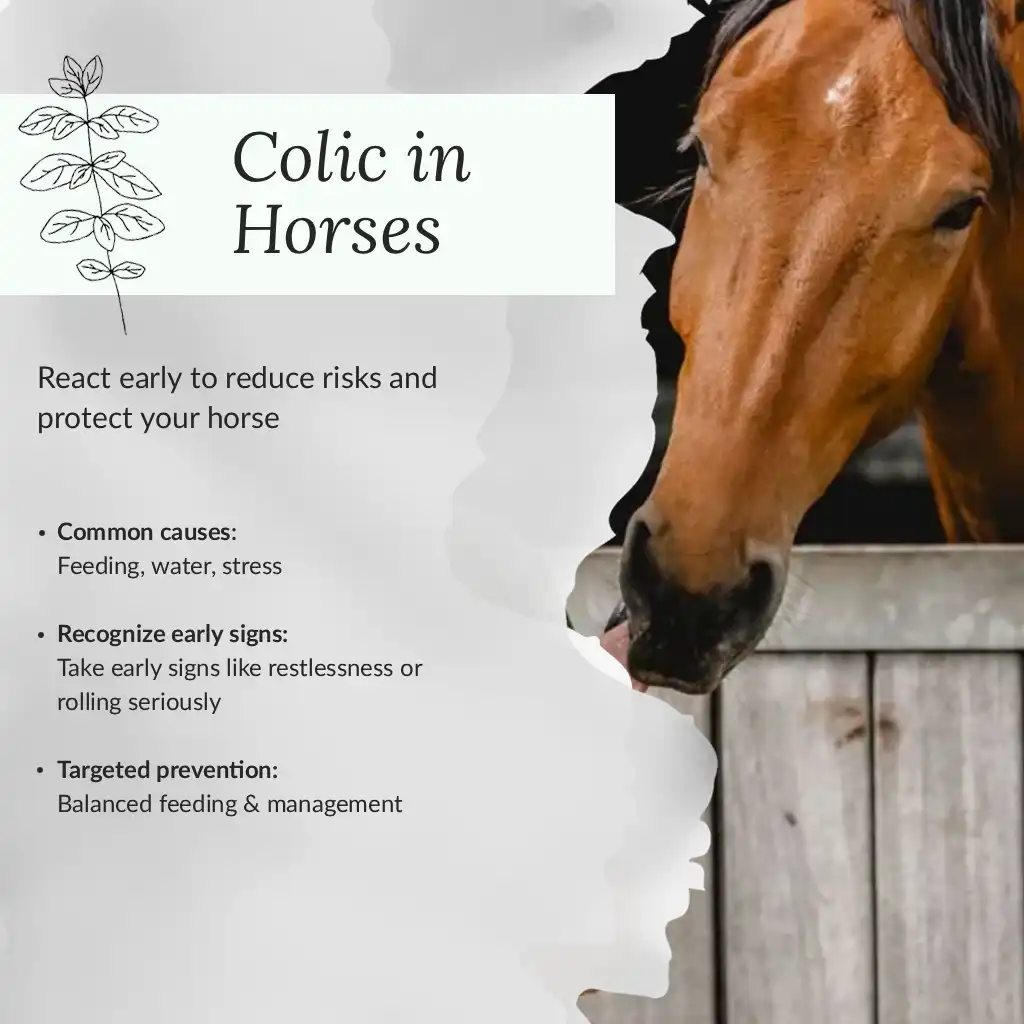
If colic is not recognised and treated in time, it can become a serious threat to the horse.
Not all colic is the same: here are the different types
Depending on the problems occurring in the digestive tract, veterinarians speak of different forms of colic in horses:
- Gas colic: Caused by excessive fermentation in the gut, usually due to feed that causes bloating or changes in diet.
- Constipation colic: Often caused by insufficient water intake or eating large amounts of feed too quickly.
- Spasmodic colic: Sudden abdominal cramps, often triggered by stress or feeding errors.
- Sand colic: Caused by ingesting sand whilst eating on bare ground.
Intestinal torsion / displacement / obstruction: Particularly dangerous – life-threatening without immediate surgery. - Stomach overload: When the stomach is overfilled, e.g. due to fermenting or swelling feed.
- Parasite-related colic: Worm infestation can irritate intestinal wall or block the intestine.
Warning: The symptoms may appear similar, but the risk and treatment differ significantly. Therefore, in
any suspected case: call the vet immediately.
Why is colic so dangerous in horses?
A horse’s digestive system is not only particularly long and finely tuned, it is also highly sensitive to disturbances. Measuring around 30 meters in length, with many loops and no ‘reverse gear’ in the gastrointestinal tract, accumulated intestinal content cannot simply be discharged.
If the movement of content through the intestine is disrupted – for example, by gas, a blockage of feed or a lack of exercise – this can quickly lead to displacement, impaction or even twisting of sections of the intestine. In such cases, the blood supply is cut off, tissue dies – a veterinary emergency that can often only be treated surgically.
Therefore, early detection and swift action are crucial for a good prognosis.
Causes: What causes colic in horses?
Colic is usually not caused by a single factor, but by an unfavourable combination of several factors that throw the horse’s sensitive
digestive system out of balance.
Typical triggers include:
- A sudden change in diet without a transition period
- Too little roughage or an excess of concentrated feed
- Dehydration, e.g. due to frost, transport or poor water quality
- Lack of exercise, particularly in stabled horses
- Stressful situations such as a change of stables, a change in the herd or transport
- Dental problems that impair chewing and thus digestion
- Worm infestation, which can lead to inflammation or blockages
- Ingestion of sand, for example when grazing on bare ground or eating from rubber mats
The more consistent the management of feeding, exercise and housing, the lower the risk of colic.
Symptoms: How can you tell if a horse has colic?
Early detection is crucial, as the quicker the response, the better the chances of a complication-free treatment. The signs of colic in horses can vary in severity, but should always be taken seriously:
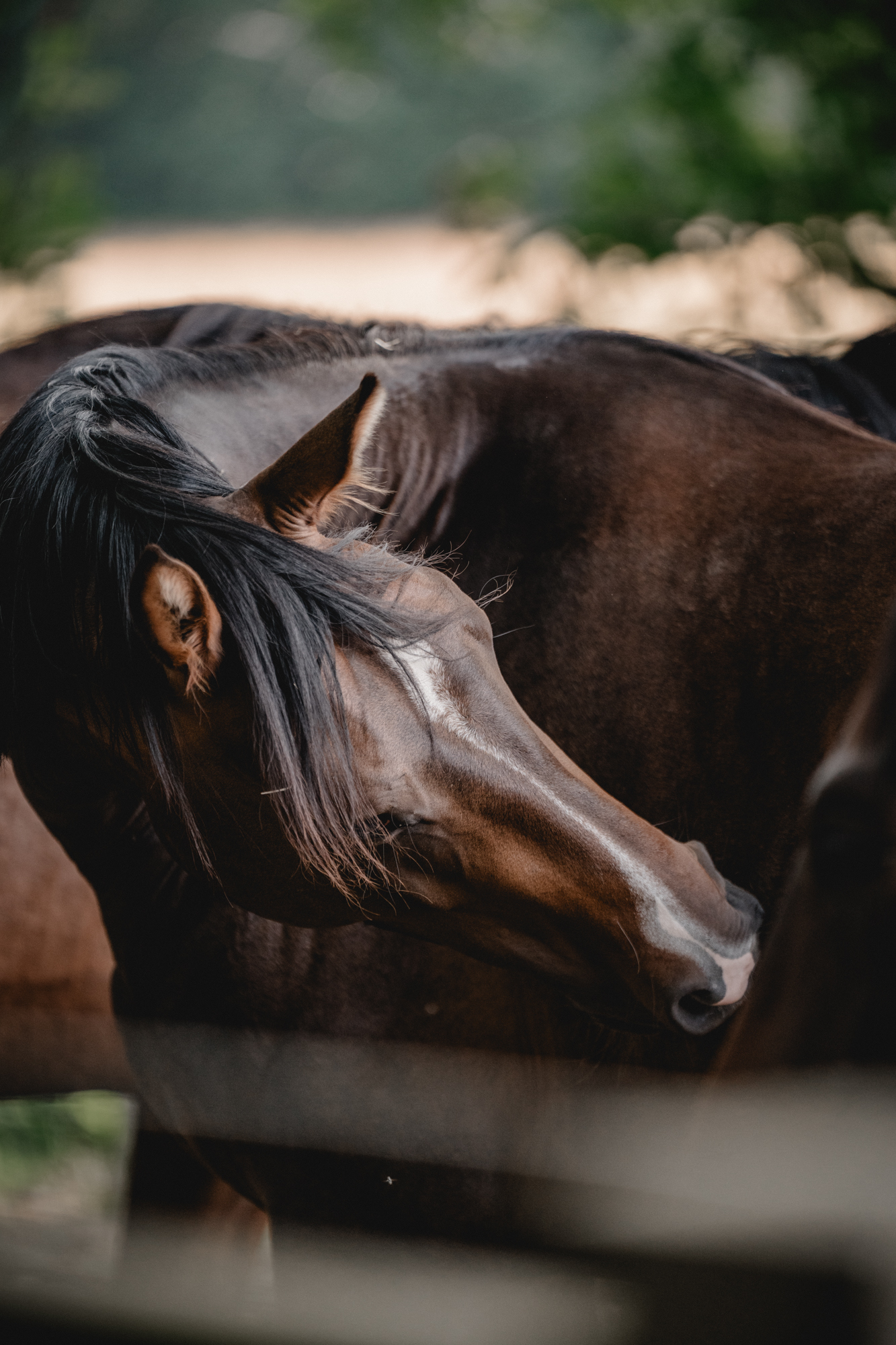
- Restlessness, rolling, frequent lying down and standing up
- Scratching, kicking at the abdomen
- Refusal to eat or drink
- Bloated abdomen
- No faeces or unusual faeces
- Sweating, rapid breathing
- Defensive posture or constantly looking at the abdomen
- Apathy or unusually calm, listless behaviour
Even a single one of these symptoms should be a warning sign. Do not hesitate, but seek veterinary advice immediately.
Possible consequences of colic in horses
If colic is not detected and treated early, it can have serious consequences for the horse. Depending on the severity and type of colic,
the following complications are possible:
- Severe strain on the circulatory system due to pain and fluid loss
- Displacement, obstruction or twisting of the intestine
- Interruption of blood flow; in extreme cases, intestinal tissue dies
- The need for surgical intervention
- Long-term digestive problems
- Recurrent colic in particularly sensitive horses
- Reduced performance – e.g. in sport or in older animals
In the worst case, untreated colic can be life-threatening. That is why prevention is the best protection.
First aid: What to do if you suspect colic?
- Contact a vet immediately
- Do not feed or water the horse
- Do not administer any painkillers
- Lead the horse gently only if it remains calm
- Allow the horse to roll if it is safe to do so and the horse gets back to its feet
- If the horse is sweating heavily, put a cooling blanket on it
- Document the symptoms and behaviour
- Be prepared to transport the horse to the clinic
Prevention: How to protect your horse effectively
A healthy digestive system is the best way to prevent colic. These measures can help:
- Sufficient roughage daily (1.5–2 kg of hay per 100 kg of body weight)
- No sudden changes in diet
- Fresh water – available at all times
- Daily and sufficient exercise
- Stress-free housing and clear routines in the stable
- Regular dental checks and deworming
- Additionally: Use of EQUISOLVAN®DIGEST to support the digestive tract
Aftercare: Support following colic
Once the acute colic has passed, the horse is no longer in mortal danger – yet the body, particularly the digestive tract, is often still severely weakened. Careful aftercare helps to restore balance to the gastrointestinal system and prevent a relapse.
Important measures during the aftercare phase:
- Gradual return to a normal diet:
Start with small, easily digestible portions. High-quality hay in small quantities, spread throughout the day, has proven effective.
Concentrated feed should initially be reduced or omitted entirely. - Stabilising the gut flora:
Following medication (e.g. painkillers, antispasmodics, antibiotics if necessary), the balance of the gut flora may be disrupted.
Targeted support through feed management, probiotics or prebiotics can help to promote the microbial balance in the gut. - Ensure adequate fluid intake:
Fresh, clean water should always be available. In addition, it may be helpful to feed mash or soaked
roughage. - Create a low-stress environment:
Colic is often stress-related. Calm, a clearly structured daily routine and familiar social contact promote recovery. - Incorporate gentle exercise:
Light exercise stimulates bowel activity. Walks on the lead or grazing (depending on the horse’s condition) support the
digestive process without overtaxing the horse. - Attend follow-up appointments with the vet:
Follow-up examinations can determine whether bowel function has been fully restored, which is particularly important in cases of severe colic
or surgery.
EQUISOLVAN®DIGEST: Natural support for the horse’s digestive system
A healthy digestive system is the best defence against digestive disorders such as colic. EQUISOLVAN® DIGEST has been specially developed to
support the natural function of the gastrointestinal tract – gently, plant-based and suitable for daily use.
The formula contains a balanced combination of:
- Oregano oil
- Peppermint oil
- Anise oil
- Blue chamomile oil
- Hemp seed and flaxseed oil
These carefully selected essential oils and plant extracts promote a stable intestinal environment, support feed conversion and can help to stabilise digestion.
When is it advisable to use this product?
- For daily support in sensitive horses
- During changes in diet or following colic, to stabilise digestion
- During periods of stress, e.g. when changing stables, during transport or when the weather changes
- For general promotion of gut health – as an integral part of feeding management
EQUISOLVAN®DIGEST is ideal for preventing problems and maintaining healthy gut function, particularly in horses with sensitive digestion.