
Equine asthma is a common chronic disease of the lower respiratory tract in horses. Dust, mold spores, pollen, and other environmental irritants in particular can trigger or worsen symptoms in affected horses.
This makes it all the more important to be aware of potential triggers, minimize
respiratory stress as much as possible, and adjust daily stable routines accordingly.
What is Equine Asthma?
Equine asthma is a chronic disease of the lower respiratory tract and is one of the most common respiratory diseases in horses. It involves inflammation of the bronchi, causing the airways to react more sensitively to irritants such as dust, mold spores, or pollen.
The inflammation causes the bronchial mucosa to swell and produce more mucus. At the same time, the muscles of the bronchi spasm, causing the airways to narrow. As a result, air has a harder time escaping—especially during exhalation—and the horse must exert significantly more effort to breathe. If the inflammation persists over a longer period, the airways may undergo permanent changes. Therefore, it is important to identify triggering
irritants as early as possible and to provide targeted relief for the airways.
Depending on the severity, symptoms can vary in intensity. Typical signs include:
- Coughing, especially at the start of work
- Nasal discharge
- Difficult or labored breathing
- Reduced willingness to perform
- Faster fatigue during training
If your horse exhibits one or more of these symptoms, you should have a veterinarian determine the cause. The earlier respiratory problems are detected, the better the respiratory system can be supported in the long term.
What other factors can put additional strain on the respiratory tract?
When it comes to respiratory problems, many people first think of winter and dusty hay. But even in the summer, the respiratory tract is exposed to numerous stressors.
Especially on hot, dry days, the concentration of fine dust particles in the air increases. Dry riding arenas and parched ground can also stir up additional dust. These fine particles penetrate deep into the respiratory tract, where they can worsen inflammatory reactions.
In addition, high temperatures make breathing even more difficult. The body must expend more energy to regulate its temperature—especially during physical exertion.
For horses with equine asthma or sensitive airways, this combination can quickly become a challenge.
Here’s how you can help your horse
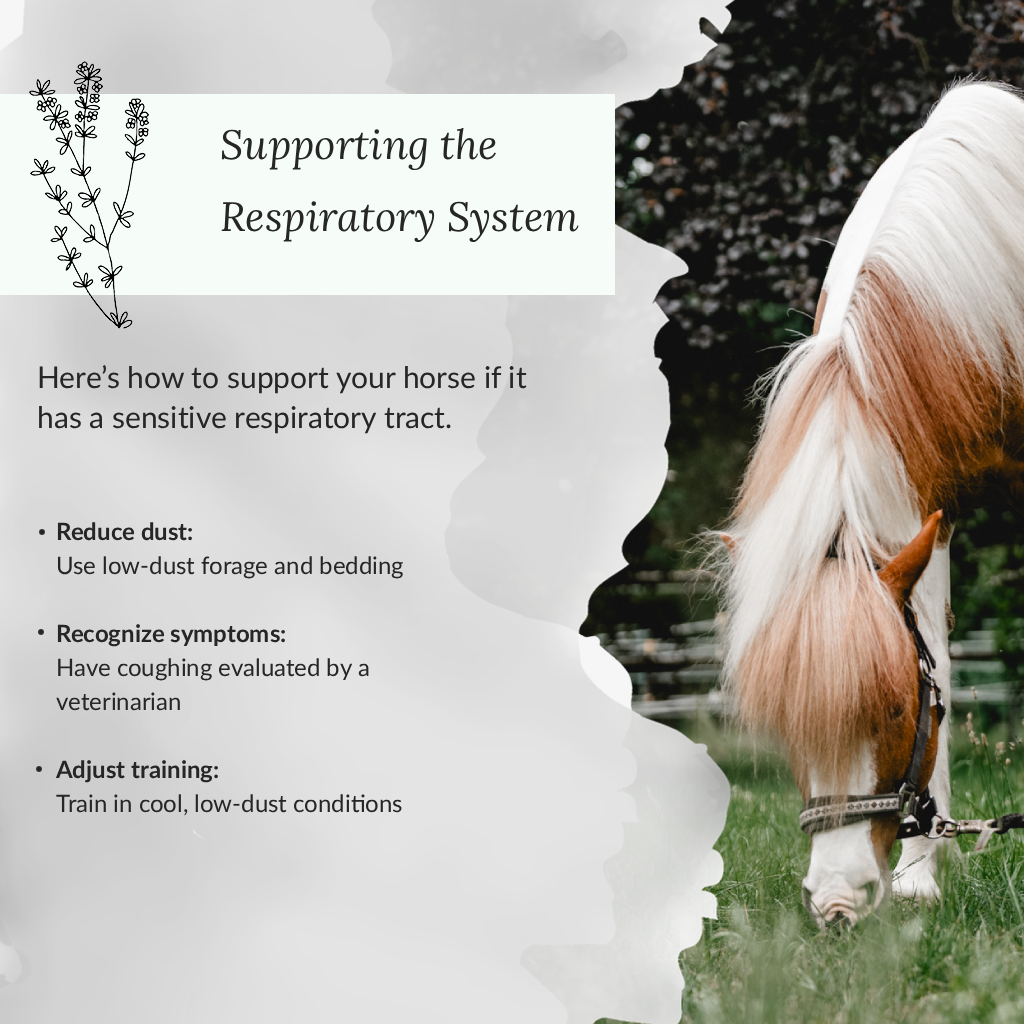
Even small changes in daily routines can help relieve the strain on your horse’s airways. These include, for example:
- On hot days, schedule training for the cooler morning or evening hours whenever possible
- Avoid heavily dusty riding arenas whenever possible, or water them down before riding
- Ensure good stable ventilation
- Use low-dust forage and bedding that’s as low in dust as possible
- Carefully monitor your horse and take the first signs of respiratory distress seriously
Horses with equine asthma, in particular, often benefit from a low-dust environment and well- adapted management.
Regular exercise also plays an important role in respiratory health. During physical activity, the horse breathes more deeply and increases its respiratory volume. This can support the natural clearance of mucus from the airways and help prevent the buildup of secretions. For horses with equine asthma in particular, regular exercise tailored to the individual’s health status is therefore advisable. The intensity of exercise for an affected horse should always be discussed with the treating veterinarian if the horse is experiencing symptoms.
Targeted Support for the Respiratory Tract
In addition to tailored housing and training management, it may be beneficial to provide targeted support for the horse’s respiratory tract.
EQUISOLVAN ® RESPIRE PLUS combines natural essential oils with selected plant extracts such as thyme, anise, and licorice root. The ingredients it contains can help soothe the respiratory tract, support mucus clearance, and promote overall respiratory health – especially in horses with sensitive respiratory tracts or during periods of increased exertion.
Feeding it as a course of treatment may also be beneficial during periods of increased stress to provide targeted support for the respiratory tract.
Every horse reacts differently to dust, pollen, and other environmental irritants. This makes it all the more important to observe your horse closely and adapt its housing, feeding, and exercise to its individual needs. In this way, you can help relieve the strain on the respiratory tract over the long term and make it easier for your horse to breathe.