

In April, many horses start the pasture season – one of the best times of the year. Fresh grass, longer days and more movement bring new energy to daily stable life.
For your horse’s body, however, the start of the pasture season mainly means one thing: a major adjustment. The transition from hay to fresh grass places new demands on the digestive system. That is why a slow and well-planned introduction to pasture is so important.
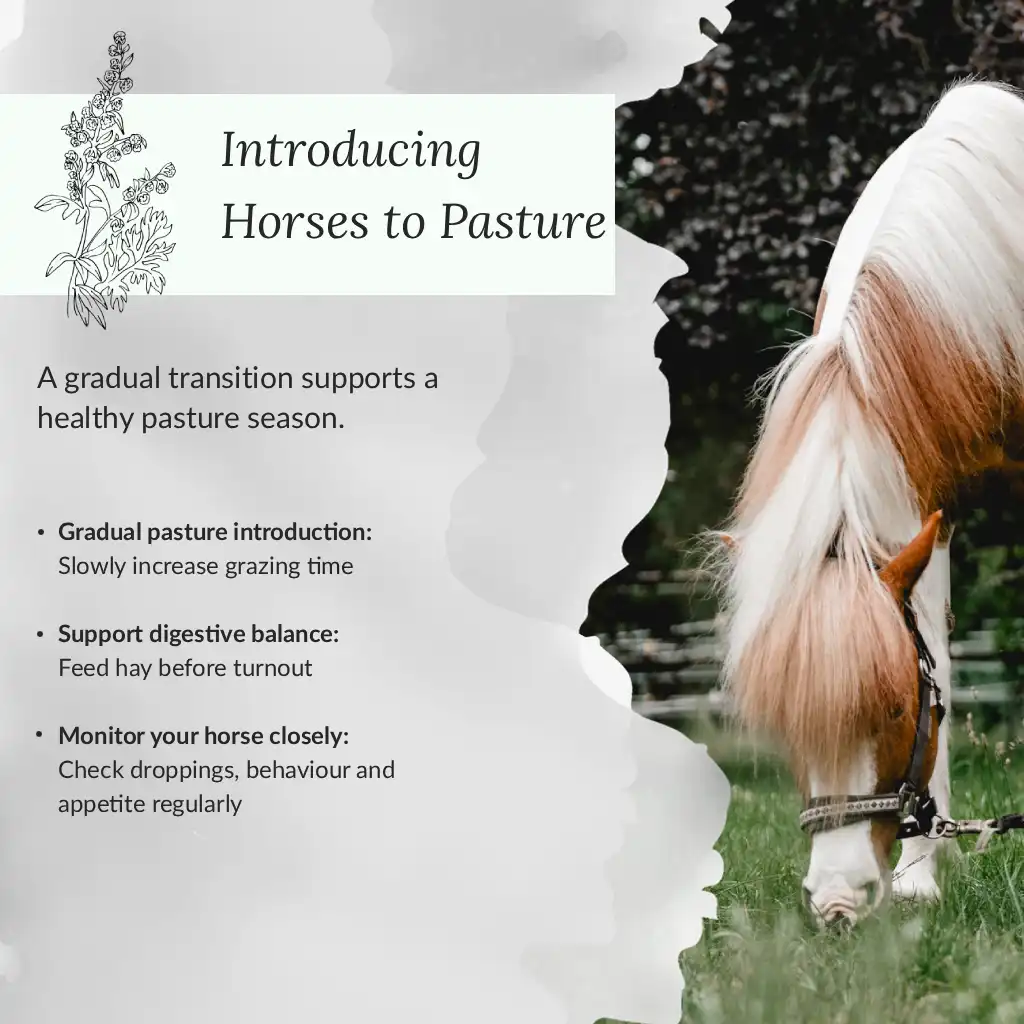
Why Is Introducing Horses to Pasture So Important?
Fresh grass differs significantly from hay: it contains more easily fermentable sugars, more water and protein, but less structural fibre. This change in composition has a direct impact on your horse’s digestion. The gut flora first needs time to adapt.
If horses are introduced to pasture too quickly, it can lead to problems such as:
- Colic
- Diarrhea
- Free fecal water
A gradual introduction to pasture allows the digestive system to adapt step by step and helps significantly reduce these risks.
Introducing Horses to Pasture: The Most Important Basics
Before you start the actual introduction-to-pasture plan, these basic guidelines can help you avoid common mistakes:
- Do not turn your horse out hungry – a small portion of hay beforehand encourages calmer grazing and supports the stomach.
- Introduce your horse to pasture daily where possible, so the gut flora can adapt continuously.
- Start with short grazing periods and increase them gradually to ease the strain on the digestive system.
- Begin on areas with shorter grass and avoid lush, energy-rich pastures at first.
- Avoid times when fructan levels are high, such as after cold nights followed by sunny weather, to reduce metabolic stress.
- Provide gentle movement, such as hand-walking or light work, to support digestion.
These basics form the foundation for introducing your horse to pasture safely and healthily.
Introduction-to-Pasture Plan for Horses: Step by Step in 4 Weeks
A structured introduction-to-pasture plan helps you gradually increase grazing time and support a smooth transition to fresh grass.
Week 1: Starting the adaptation phase
During the first few days, the digestive system is slowly introduced to fresh grass.
- Day 1–3: 10–15 minutes of grazing daily
- Day 4–7: 20–30 minutes of grazing daily
Goal: Allow the body to adapt to the new diet without overloading the digestive system.
Week 2: Gradually increasing pasture time
The grazing time can now be increased carefully.
- 30–60 minutes of grazing daily
- Increase by no more than 10–15 minutes per day
Goal: The gut flora begins actively adapting to fresh grass.
Week 3: Supporting digestive stability
Your horse’s metabolism gradually adapts to life on pasture.
- 1–2 hours of grazing daily
- Optional: divide into two grazing sessions per day
Goal: Further stabilize the digestive system while continuing to minimize risks.
Week 4: Transition to regular pasture time
Now the transition to normal pasture turnout begins.
- At least 2–4 hours of grazing
- Adjust individually depending on age, metabolism and workload
- Gradually increase to the desired pasture time
Goal: Prepare your horse for the full pasture season.
Support From Within: Focusing on Digestion & Gut Health
It is also worth looking at parasite management: before the start of the pasture season, checking the current parasite status and taking action where needed can be useful. EQUISOLVAN® VERMIPLUS can provide supportive care by helping stabilize balance in the digestive tract and promoting an environment less favorable to parasites.
This way, you create the best conditions not only from the outside with a well-planned introduction to pasture, but also support your horse from within as it starts the pasture season.
Conclusion: Planning Pasture Introduction the Right Way
Good pasture management is key to a healthy start to the pasture season. With a well-planned introduction-to-pasture plan, gradually increasing pasture time and close observation of your horse, many digestive issues can be avoided. This makes the transition to pasture not only safe for your horse, but also relaxed.